
Four things decide what a customer is charged: where it ships from, where it is going, what it weighs, and which service they pick.
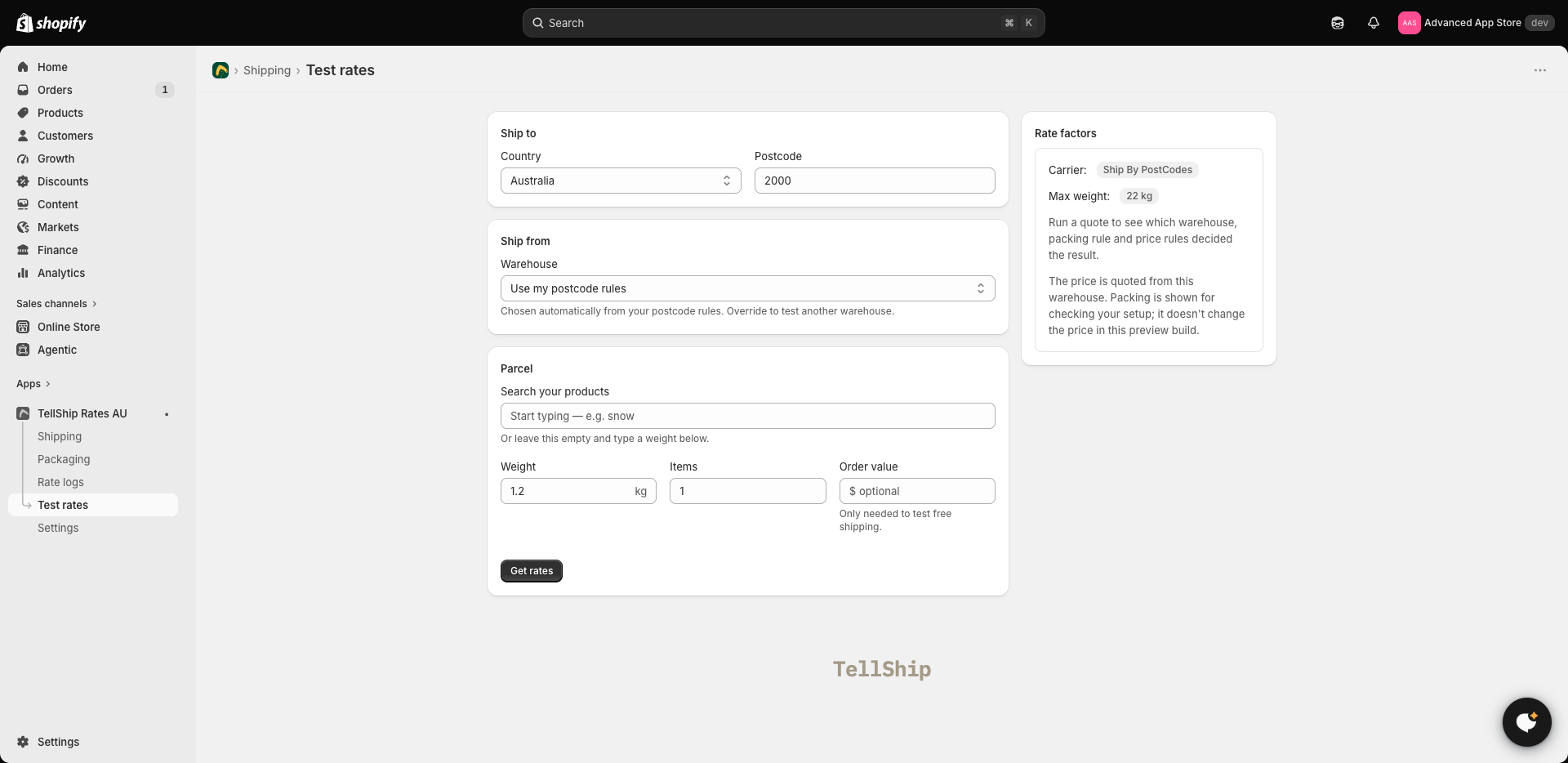
Where it ships from
Prices are worked out from one of your locations — the one Shopify says holds the stock, or the one your own postcode rules name. Distance is part of the price, so Melbourne to Perth and Perth to Perth are not the same number.
A location needs a street address in Shopify to be used at all.
Where it is going
Destinations are grouped into zones by postcode. A zone is a set of postcodes
you write out — 6000-6999, or a list — and the first zone that claims a
customer's postcode is the one that prices their order.
Every store also has Everywhere else, which claims any postcode no other zone does. It cannot be deleted, because without it a customer could reach checkout with no price at all.
What it weighs
Inside each zone, prices are set in bands: up to 500 g, up to 1 kg, up to 3 kg, and so on. A parcel is charged the band it fits in. Above 5 kg the size of the parcel starts to count as well as its weight — see Do I need to set up packaging?
Weights come from your products. A product with no weight is treated as weightless, which is how a suspiciously cheap quote happens.
Which service
Customers choose between Standard and Express, and you can turn either off. You can also add a percentage to both, and round every price the same way — under Settings.
Where the numbers come from
Prices are worked out from Australia Post's published retail prices. You do not need a carrier account, and nothing needs to be negotiated before you start.